Why Should Saudi Distributors Consider AI?
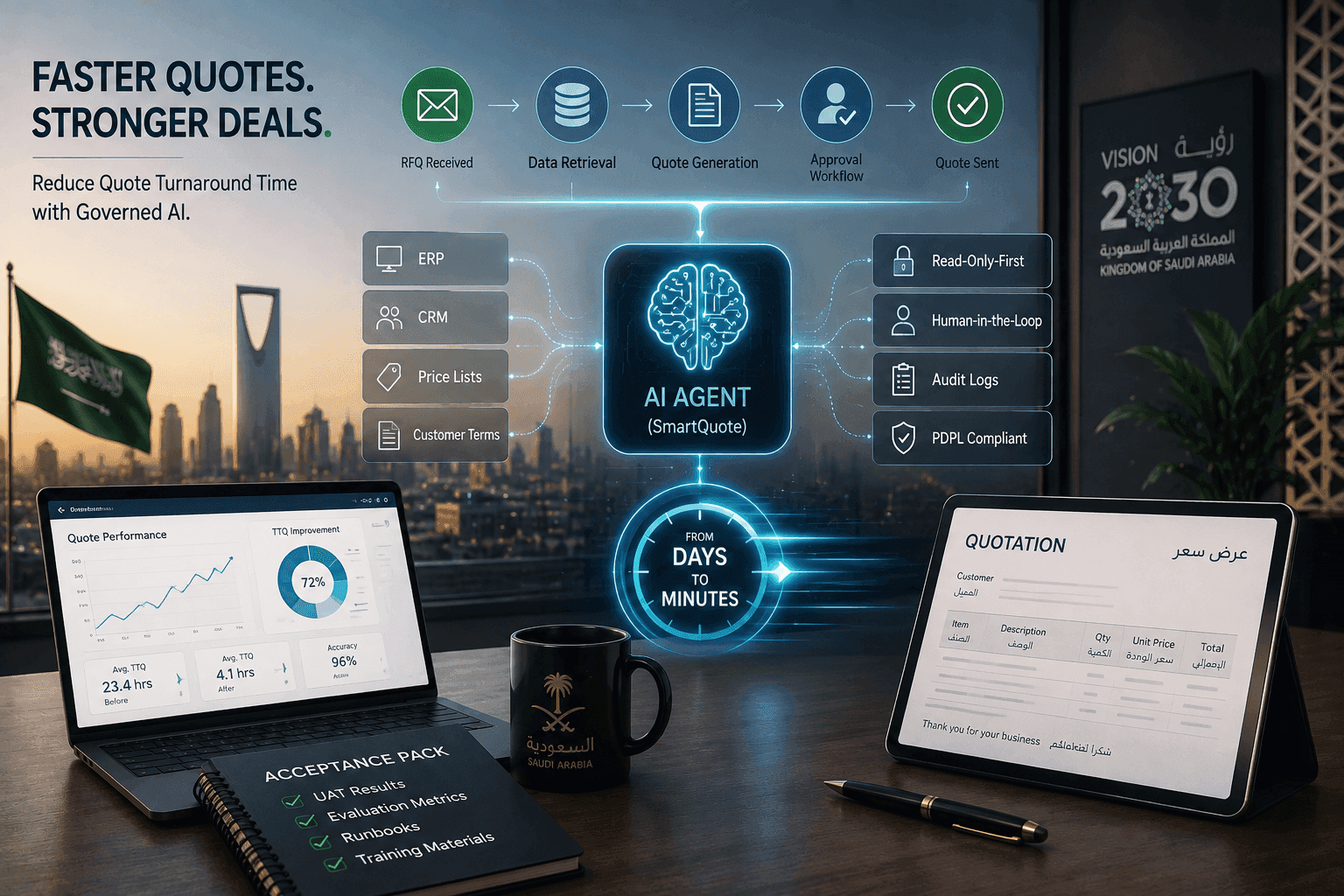
In the rapidly evolving business landscape of Saudi Arabia, distributors face unique challenges that can be addressed effectively through the adoption of AI technologies. The integration of AI can lead to improved efficiency in supply chain management, enhanced customer experiences, and optimized operational workflows. For example, AI can streamline the RFQ-to-quote processes, reducing time and errors associated with manual handling. This not only accelerates transaction times but also enhances accuracy and reliability, key factors for competitive advantage in the distribution sector.
Moreover, AI provides the tools necessary for predictive analytics, enabling distributors to anticipate demand fluctuations and adjust inventory levels accordingly. This capability reduces waste, lowers costs, and ensures that customer needs are met promptly. By leveraging AI, distributors can transform data into actionable insights, allowing for strategic decision-making that aligns with Saudi Arabia's Vision 2030.
How Does PDPL Compliance Affect AI Implementation?
The Saudi Personal Data Protection Law (PDPL) is a critical consideration for any AI implementation strategy within the Kingdom. Distributors must ensure that their AI systems are compliant with PDPL to avoid legal repercussions and build trust with their stakeholders. This involves adopting a read-only-first approach, ensuring that AI agents do not alter data without explicit human intervention. By implementing human-in-the-loop systems, distributors can maintain control over AI processes, ensuring that decisions are auditable and transparent.
Audit logs and data residency are also essential components of PDPL compliance. AI systems must be designed to log all data interactions and store data within Saudi Arabia to comply with local regulations. These measures not only ensure legal compliance but also enhance the overall governance of AI systems, fostering a culture of accountability and responsibility.
What Does a Successful AI Pilot Look Like?
A successful AI pilot for Saudi distributors should deliver tangible results within a short timeframe, typically 6 to 8 weeks. The pilot should be scoped with clear Key Performance Indicators (KPIs) such as Time to Quote (TTQ), First Contact Resolution (FCR), and Average Handling Time (AHT). These metrics provide a quantifiable measure of the pilot's success and help in assessing the ROI of AI implementations.
LeenAI's Acceptance Pack ensures that each pilot is equipped with user acceptance testing, evaluations, runbooks, and training. This comprehensive approach guarantees that the AI system is not only functional but also aligns with the specific needs and objectives of the distributor. The focus on governance-first AI ensures that pilots are safe, effective, and compliant from the outset.
How Can AI Enhance Customer Experience in Distribution?
AI can significantly enhance customer experience by providing personalized interactions and faster response times. For instance, implementing AI-driven chatbots through platforms like WhatsApp CX can automate routine inquiries, freeing up human agents to handle more complex issues. This not only improves efficiency but also increases customer satisfaction by reducing wait times and providing quick resolutions.
Furthermore, AI can analyze customer data to offer personalized recommendations and services, fostering loyalty and engagement. By understanding customer preferences and behaviors, distributors can tailor their offerings to meet specific needs, creating a more satisfying customer journey.
How Do AI Agents Ensure Data Security?
Data security is paramount in AI implementations, especially in the context of PDPL. AI agents must be designed to operate within strict security frameworks that protect sensitive information. This includes implementing robust encryption protocols, access controls, and continuous monitoring to detect and respond to potential threats.
LeenAI's AI agents, such as OpsRAG, are built with data security in mind, incorporating audit logs and data minimization techniques to ensure compliance and protect customer data. By maintaining a secure operating environment, distributors can confidently leverage AI technologies without compromising data integrity.