Why Human-in-the-Loop AI Matters for Saudi Enterprises
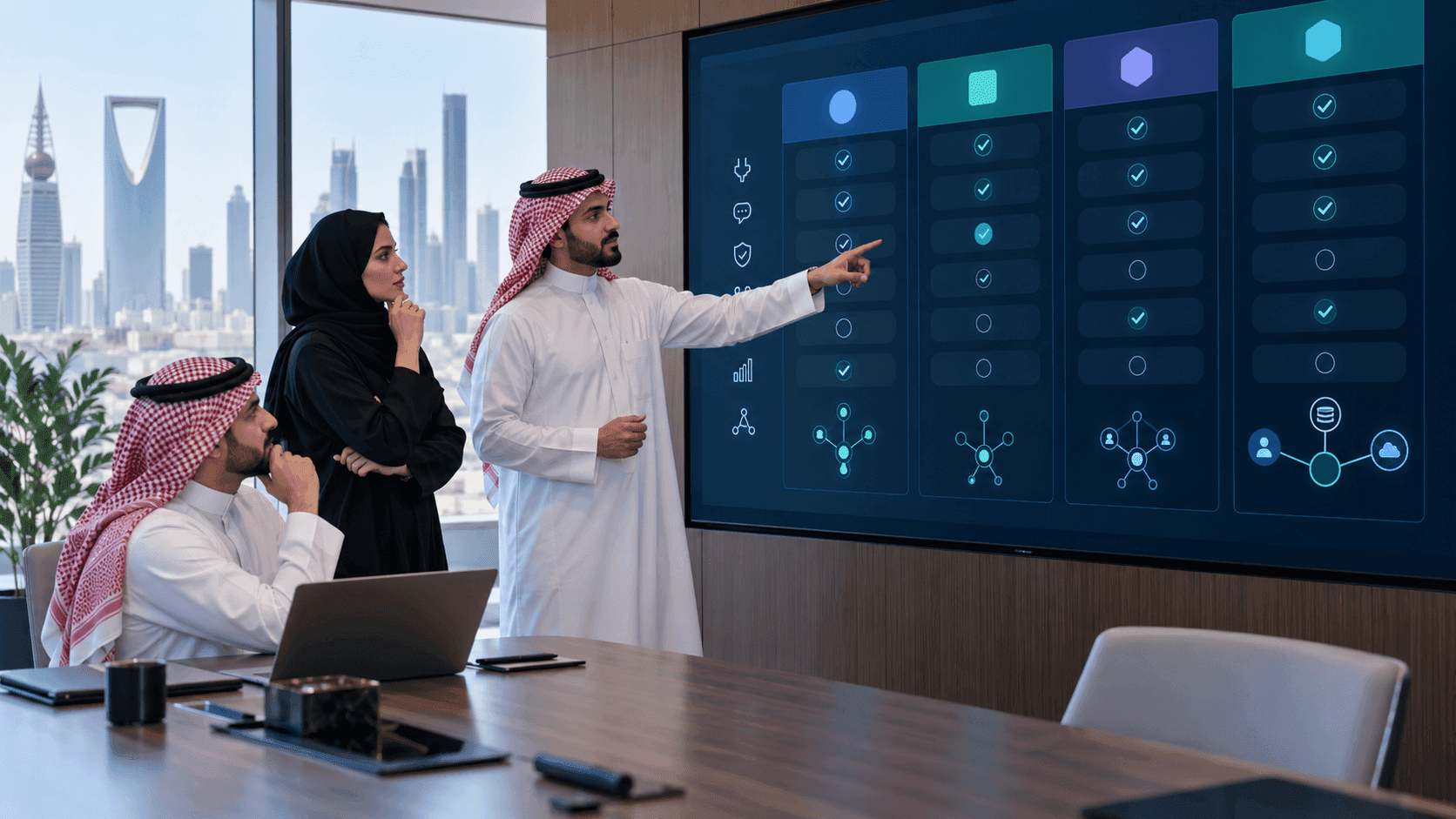
In the rush to adopt artificial intelligence, many enterprises face a critical question: how do we deploy AI that acts autonomously without losing control? For Saudi organizations navigating Vision 2030's digital transformation goals, the answer lies in human-in-the-loop (HITL) AI—a governance model where AI systems propose actions, but humans make the final call. This approach is not a limitation; it is a strategic advantage, enabling faster, safer adoption of AI agents in mission-critical workflows.
HITL AI addresses the core tension between automation and accountability. By keeping a human in the decision loop, enterprises can deploy AI agents that handle repetitive tasks—like RFQ-to-quote processing or customer inquiries—while ensuring that high-stakes decisions are reviewed by knowledgeable staff. This is particularly important in Saudi Arabia, where PDPL (Personal Data Protection Law) mandates strict data governance and auditability. HITL AI provides the guardrails needed to comply with these regulations while reaping the benefits of AI.
How Does Human-in-the-Loop AI Align with PDPL and Vision 2030?
Saudi Arabia's PDPL requires organizations to ensure data minimization, purpose limitation, and audit trails for any processing of personal data. Human-in-the-loop AI naturally supports these requirements. Because AI agents are designed to be read-only-first and require human approval before acting, they minimize the risk of unauthorized data processing. Every action is logged, creating an audit trail that satisfies PDPL's accountability provisions.
Moreover, HITL AI aligns with Vision 2030's goal of building a digital economy. By adopting governed AI, Saudi enterprises can lead in innovation while maintaining trust. For example, a procurement leader using an AI agent to draft quotes can review and approve each quote before it is sent, ensuring accuracy and compliance. This is not just about compliance—it is about building a culture of responsible AI use that positions Saudi Arabia as a regional leader in ethical technology.
What Does a Human-in-the-Loop AI Pilot Look Like?
A typical HITL AI pilot in a Saudi enterprise starts with a fixed scope and clear KPIs. For instance, a distributor might deploy an AI agent to automate quote generation. The agent reads existing product data and customer history (read-only) and drafts a quote. A human procurement specialist then reviews the quote, makes adjustments, and approves it. The system logs every action, providing a transparent audit trail.
This pilot would run for 6-8 weeks, with success measured by metrics like Time-to-Quote (TTQ) and accuracy. The goal is not to remove humans but to augment their capabilities. By automating the repetitive parts of the workflow, staff can focus on complex negotiations and relationship building. This approach ensures that AI delivers measurable value without compromising governance.
How to Choose the Right AI Agent for Your Workflow?
When selecting an AI agent for your enterprise, look for solutions that are designed with governance in mind. Key features include read-only-first access, human-in-the-loop approval workflows, and comprehensive audit logging. For example, LeenAI's OpsRAG is a governed AI agent that retrieves information from your documents and suggests responses, but requires human approval before sending. Similarly, SmartQuote automates quote generation while keeping a human in the loop for final approval.
It's also essential to consider the vendor's approach to PDPL compliance. Ensure that the AI agent is built with data residency and minimization in mind. In Saudi Arabia, this is non-negotiable. By choosing a vendor that prioritizes governance, you can avoid costly compliance issues down the line.
What Are the Risks of AI Without Human Oversight?
Deploying AI without human oversight can lead to significant risks, including biased decisions, data breaches, and regulatory fines. In Saudi Arabia, the consequences of non-compliance with PDPL can be severe, including reputational damage and legal penalties. Moreover, autonomous AI can make errors that are costly to rectify, especially in high-stakes areas like procurement or healthcare.
Human-in-the-loop AI mitigates these risks by ensuring that AI never acts unilaterally. This is particularly important in customer-facing applications, where a wrong response can damage trust. By keeping humans in the loop, enterprises can catch errors early and maintain control over their operations.
How to Build a Governance Framework for AI Agents?
Building a governance framework for AI agents involves several steps. First, define clear roles and responsibilities for human supervisors. Second, establish approval workflows that are integrated into the AI agent's design. Third, implement audit logging to track all AI actions. Finally, regularly review AI performance against KPIs and adjust as needed.
LeenAI's Acceptance Pack helps enterprises implement this framework by providing UAT, evals, runbooks, and training. This ensures that your team is prepared to manage AI agents effectively. By investing in governance, you can scale AI adoption with confidence, knowing that every action is accountable and aligned with your business goals.
Why LeenAI for Human-in-the-Loop AI?
LeenAI specializes in governed AI agents for Saudi enterprises, built with a read-only-first, human-in-the-loop philosophy. Our agents are PDPL-aware, audit-logged by design, and bilingual from day one. We offer fixed-scope pilots with clear KPIs, so you can see results in weeks, not years. If you're ready to explore how HITL AI can transform your operations, talk to us or see how we scope pilots.