Why do warehouse cameras already hold the answer to congestion?
Most Saudi warehouses already have cameras. They were installed for security, not for operations, and their footage is usually reviewed only after an incident. Yet the same feeds contain the daily evidence of how work actually flows: where forklifts wait, where pallets stack up at the inbound dock, where pickers cross paths with replenishment, and where a queue forms at dispatch every afternoon. Congestion is rarely a mystery to the floor supervisor; the problem is that the evidence is not measured, not shared, and not tied to a decision.
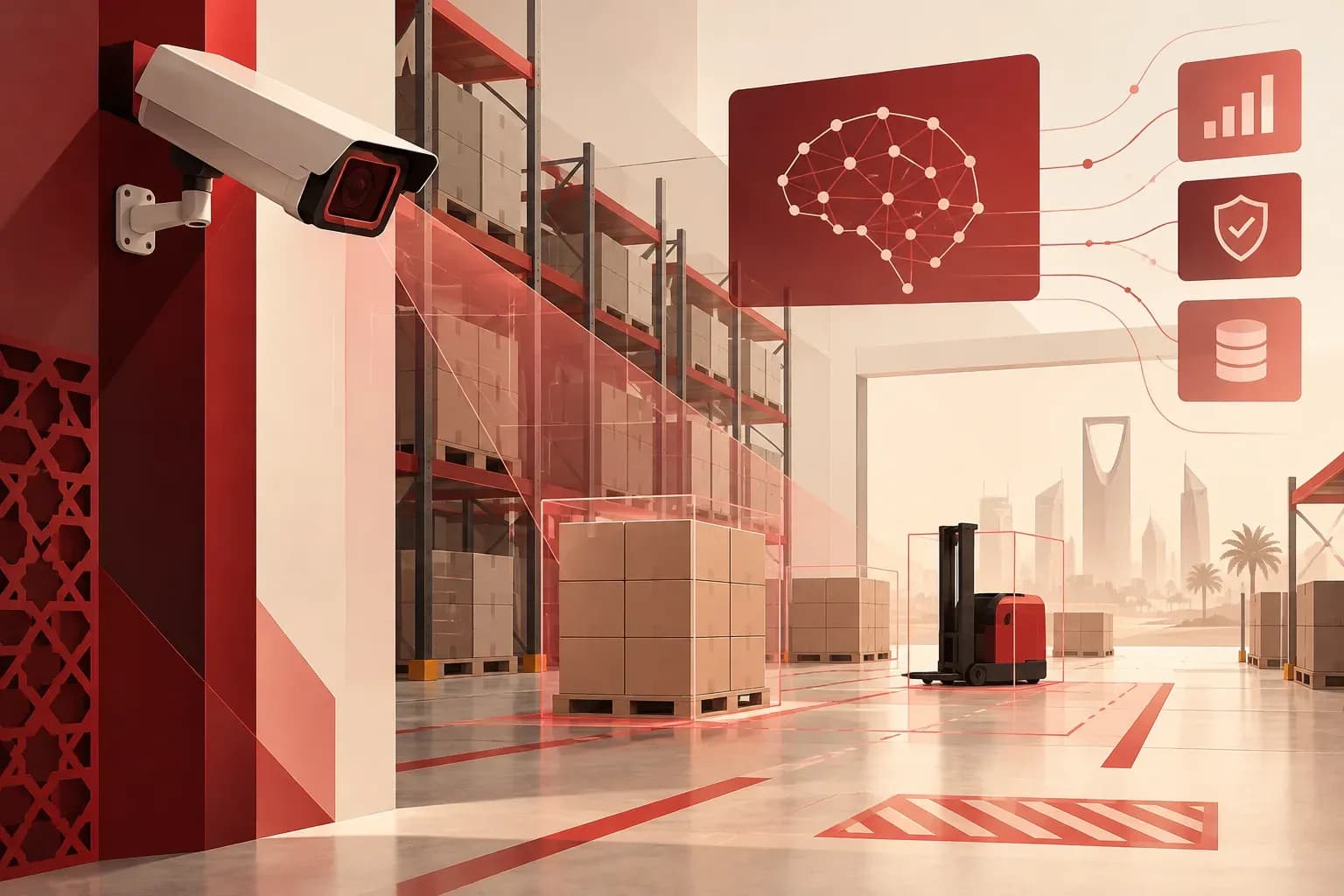
A camera congestion insight system changes that by converting existing video into structured observations: counts per zone, dwell time at a station, queue length at a dock, and the moments when a flow breaks down. The value is not a prettier dashboard. It is a shorter path from observation to action, whether that action is reallocating labour, changing a layout, staggering a shift, or adjusting a dispatch slot.
For Saudi enterprises, the operational case is straightforward. Warehouse space is expensive, labour is a real cost, and Vision 2030's logistics and industrial ambitions are pushing throughput expectations upward. The governance case is equally important: any system that observes people at work must be designed with data minimization, scoped usage, and reviewable data flows from day one.
What does a governed camera congestion system actually measure?
A useful system measures a small set of operational signals, not everything a camera can see. The first step is agreeing on the questions the business wants answered: Is the inbound dock congested between 09:00 and 11:00? Does the packing area become a bottleneck when order volume spikes? Are forklift routes crossing pedestrian zones at unsafe rates? Each question maps to a metric, a zone, and a decision owner.
Typical signals include zone occupancy, queue length and wait time at a dock or staging area, dwell time at a station, and flow counts across a defined line. Safety-adjacent signals such as near-miss patterns can be included where the use case calls for it. What matters is that each metric has a definition, a calibration baseline, and a named person who will act on it. A metric nobody owns is just a chart.
This is where many pilots fail. They install detection and produce numbers without agreeing in advance what a good number looks like or who responds when it is missed. A governed approach fixes the metric definitions and acceptance criteria before the first camera is calibrated.
How does Vision Safety Watch support congestion insights without overreaching?
Vision Safety Watch is LeenAI's computer vision module for warehouses and safety. It includes detection models, a calibration plan, a compliance KPI dashboard, and operational runbooks. For congestion, it supports counting, congestion, and safety detection with dashboards and runbooks, so the output is not raw video but an operational picture the team can act on.
The workflow is deliberately plain: calibrate cameras and areas, run detection and alerts, then review the dashboard and runbook. Calibration matters because a camera angle, a zone boundary, and a lighting condition all affect what a model sees. The calibration plan makes those assumptions explicit and testable, rather than leaving them buried in a vendor's configuration.
The runbooks matter just as much. They define what happens when a congestion threshold is crossed: who is notified, what they check, and what decision they are authorized to make. This is how the system behaves like a teammate rather than a surveillance tool. It surfaces a condition, routes it to the right person, and records what was done.
Is camera-based congestion monitoring PDPL-compliant in Saudi Arabia?
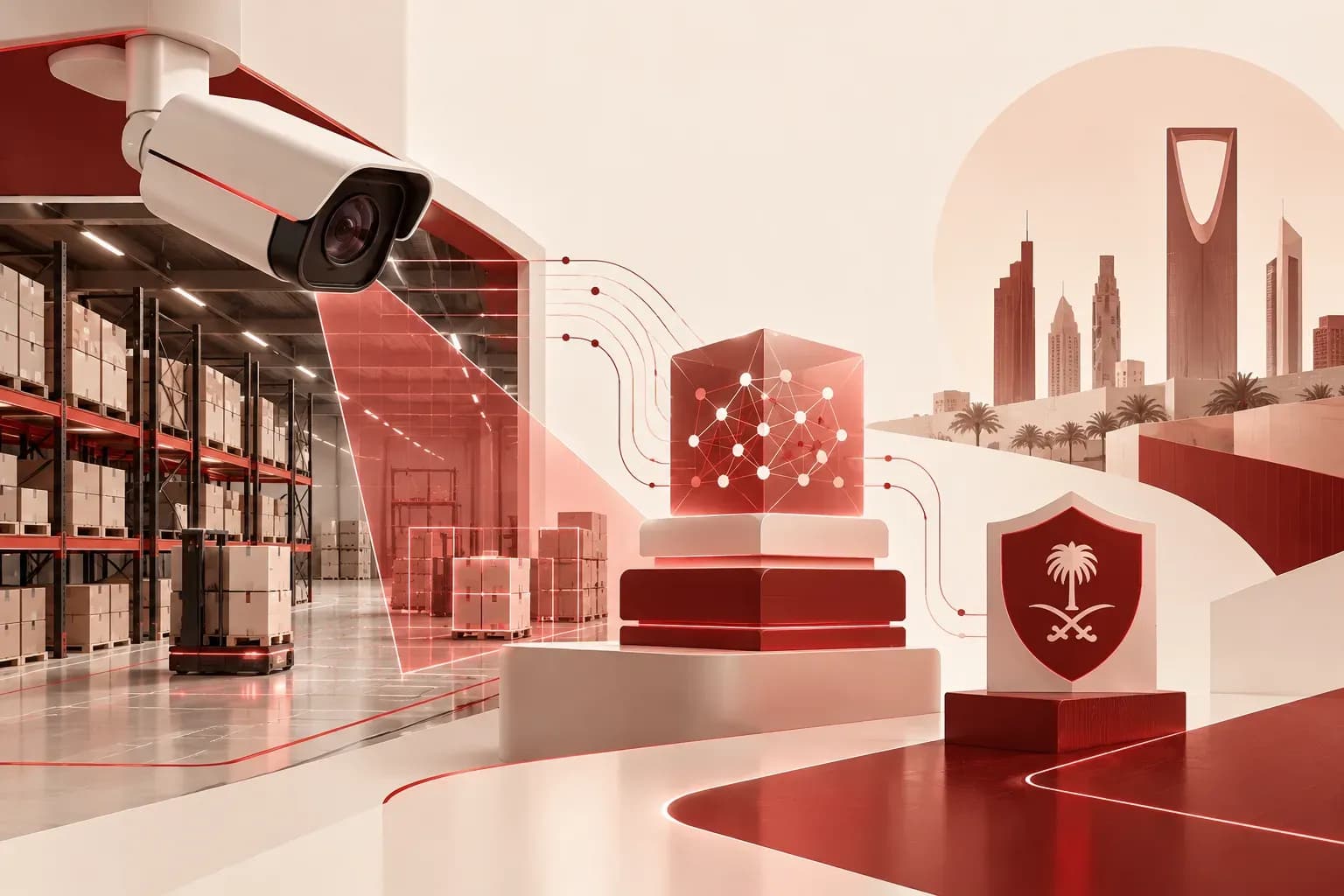
It can be, but only if privacy is designed in rather than added later. The Saudi Personal Data Protection Law (PDPL) treats identifiable images of individuals as personal data, so a warehouse camera system must be built around minimization, scoped purpose, and controlled access. The safest starting posture is read-only: the system observes flows and counts, and does not attempt to identify individuals unless a specific, justified use case requires it.
Practical safeguards include defining the purpose of each camera feed in writing, limiting retention to what the operational use case needs, restricting access through role-based controls, and keeping audit logs of who viewed what and when. Data residency and reviewable data flows should be settled before code is written, not after a pilot succeeds. Where a use case genuinely needs person-level detection, that decision should be explicit, documented, and approved by the right owner.
LeenAI designs PDPL-aware architecture around minimization, scoped usage, and reviewable data flows from the start, and Vision Safety Watch starts read-only and provides auditability. That posture is not a limitation; it is what makes the system defensible in front of a compliance team and durable inside the operation.
What should acceptance criteria look like for a congestion pilot?
Acceptance criteria are the difference between a demo and a decision. Before a pilot begins, agree on the metrics, the zones, the measurement window, and the threshold that counts as success. For detection quality, a Precision/Recall target of ≥0.9 is a reasonable acceptance example, but it must be tested against your actual layout and lighting, not a vendor's benchmark footage.
Operationally, acceptance should also cover the human loop. Does the dashboard surface the right condition at the right time? Does the runbook route it to the right person? Can the team explain, weeks later, why a specific alert fired and what was done about it? A pilot that produces accurate counts but no behaviour change has not passed.
This is why a time-boxed pilot with baseline KPIs, user acceptance testing, and an Acceptance Pack is the right delivery shape. It gives the buyer a clear go/no-go gate, and it gives the operations team a system they helped define. If you want to see how we scope this kind of work, see how we scope pilots or talk to us about one workflow.
How does a congestion insight system fit the wider agentic operating model?
Congestion insights are most valuable when they connect to action. A camera system that flags a bottleneck at the inbound dock is useful; a system that also triggers a staffing checklist, a dispatch reschedule, or a maintenance ticket is transformative. This is the agentic pattern LeenAI builds toward: AI agents that run operations like a team of employees while keeping the client team in control.
The same governance principles apply across LeenAI's agents. OpsRAG, LeenAI's AI Document Processing and Company Knowledge Search, answers questions from approved documents with citations. SmartQuote, LeenAI's AI Quotation System, drafts quotes for human approval. WhatsApp CX, LeenAI's AI Customer Service for WhatsApp Business, escalates to people with full context. Each is read-only first, auditable, and designed for controlled escalation.
For a warehouse leader, the practical next step is to pick one workflow, define the decision it should improve, and ask for a scoped pilot. LeenAI's offer is simple: tell us one workflow, and within 24 hours we reply with scope, timeline, and SAR cost. Fixed scope, locked deliverables, defined acceptance criteria, and a clear go/no-go gate. You can start here or explore Vision Safety Watch and our AI pilots to see how the pieces fit.
What separates a useful congestion system from an expensive science project?
Three things: a narrow scope, a named decision owner, and an honest acceptance gate. Narrow scope means one or two zones and a handful of metrics, not a warehouse-wide transformation in phase one. A named decision owner means someone on the operations side is accountable for acting on the insight. An honest acceptance gate means the pilot can fail, and everyone agrees in advance what failure looks like.
The most common failure mode is overbuilding. Teams buy detection models before agreeing on the question, or they instrument every camera before calibrating one. A disciplined pilot does the opposite: calibrate one area, prove the metric, prove the human loop, then expand.
LeenAI differentiates its delivery through read-only-first operation, auditable logic, and controlled escalation. That is not a marketing line; it is the shape of the work. If your warehouse already has cameras and a congestion problem you can name, that is enough to start a conversation.