
Why AI is Crucial for Saudi Manufacturing
The manufacturing sector in Saudi Arabia is undergoing a significant transformation, driven by Vision 2030's goal to diversify the economy and reduce dependency on oil. AI plays a pivotal role in this transformation by enhancing operational efficiency, reducing costs, and improving product quality. For decision-makers, understanding how AI can be integrated into manufacturing processes is essential for staying competitive.
AI technologies such as predictive maintenance, quality control, and supply chain optimization can drastically reduce downtime and increase productivity. By using AI to analyze large datasets, manufacturers can predict equipment failures before they occur, ensuring uninterrupted production. This proactive approach not only saves costs but also enhances the reliability of manufacturing operations.
How to Align AI with Vision 2030
Aligning AI initiatives with Vision 2030 is crucial for Saudi enterprises looking to leverage government support and incentives. Decision-makers should first identify key areas where AI can drive the most impact, such as reducing energy consumption or improving supply chain logistics. By setting clear objectives that align with national goals, companies can secure funding and partnerships that facilitate AI adoption.
Furthermore, integrating AI solutions that are PDPL-compliant ensures that data privacy and protection are maintained, which is a priority under Vision 2030. LeenAI's governed AI agents, such as OpsRAG, are designed with these compliance measures in mind, providing a robust framework for enterprises to build upon.
What Does a 6-Week AI Pilot Deliver?
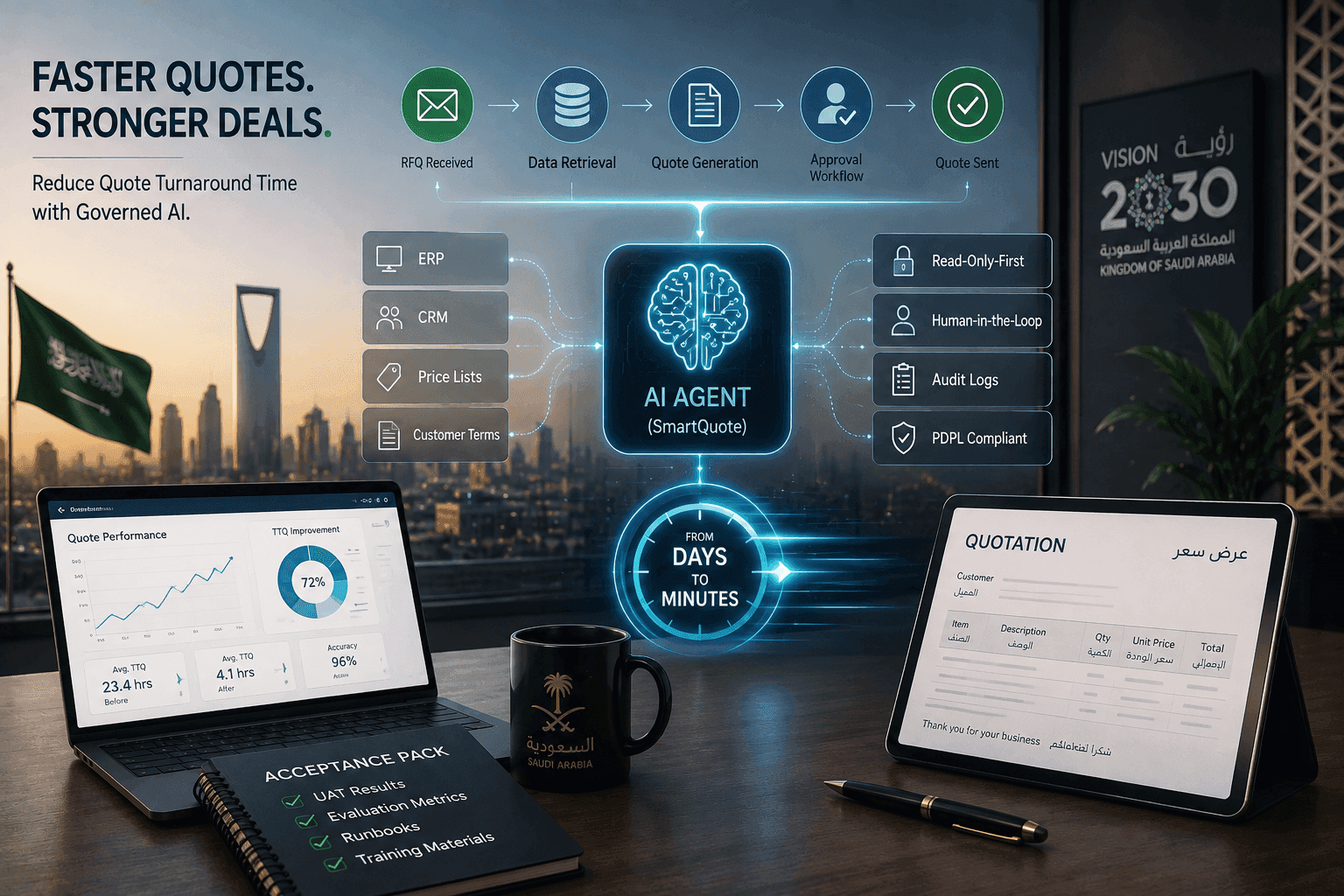
A 6-week AI pilot can deliver substantial insights and measurable outcomes for manufacturing enterprises. During this period, companies can evaluate the technology's impact on specific KPIs like time-to-quote (TTQ) and first-call resolution (FCR). LeenAI's Acceptance Pack ensures that these pilots are structured with clear evaluation criteria and training, enabling decision-makers to make informed choices about full-scale implementation.
In practical terms, a short pilot allows enterprises to test AI solutions in a controlled environment, minimizing risks and maximizing learning. By focusing on a fixed-scope project, decision-makers can quickly assess the ROI and scalability of AI technologies in their manufacturing processes.
How Does AI Ensure Compliance with PDPL?
Compliance with the Saudi Personal Data Protection Law (PDPL) is a critical consideration for any AI implementation. AI systems must be designed to handle data responsibly, with features like read-only-first access and human-in-the-loop mechanisms to ensure data integrity and privacy.
LeenAI's AI agents are built with PDPL compliance at their core, incorporating audit logs and data residency requirements from the outset. This design not only protects sensitive information but also provides transparency and accountability, which are essential for maintaining trust with stakeholders and customers.
Steps to Implement AI in Manufacturing
Implementing AI in manufacturing requires a strategic approach that begins with a thorough assessment of current processes and potential AI applications. Decision-makers should start by identifying pain points and areas where AI can add value, such as automating repetitive tasks or enhancing quality control.
Next, selecting the right AI partner is crucial. Companies like LeenAI offer governed AI solutions that are tailored to the specific needs of Saudi enterprises. Engaging with a partner that understands local regulations and business environments can significantly streamline the implementation process.
Finally, continuous evaluation and adaptation are key. As AI technologies evolve, so too should the strategies for their deployment. Regularly reviewing AI performance against set KPIs ensures that the technology continues to meet business objectives and adapts to changing market conditions.
The Role of AI in Enhancing Customer Experience
Beyond operational efficiencies, AI also plays a significant role in enhancing customer experience. Tools like WhatsApp CX enable manufacturers to provide bilingual customer support, improving response times and satisfaction rates. By automating customer interactions, companies can focus on more complex queries and build stronger relationships with their clients.
AI-driven insights allow manufacturers to better understand customer needs and preferences, leading to more personalized and effective service offerings. This not only boosts customer loyalty but also opens up new revenue streams through targeted marketing and sales strategies.