
Overview
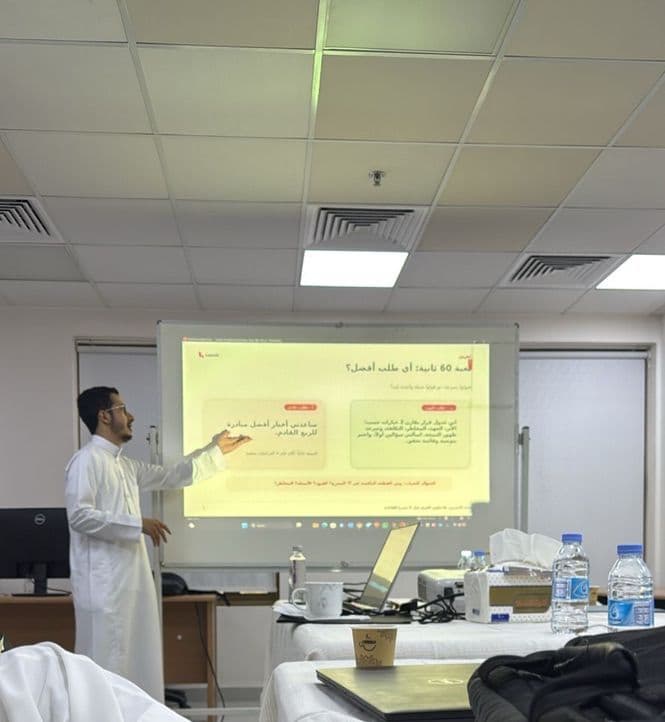
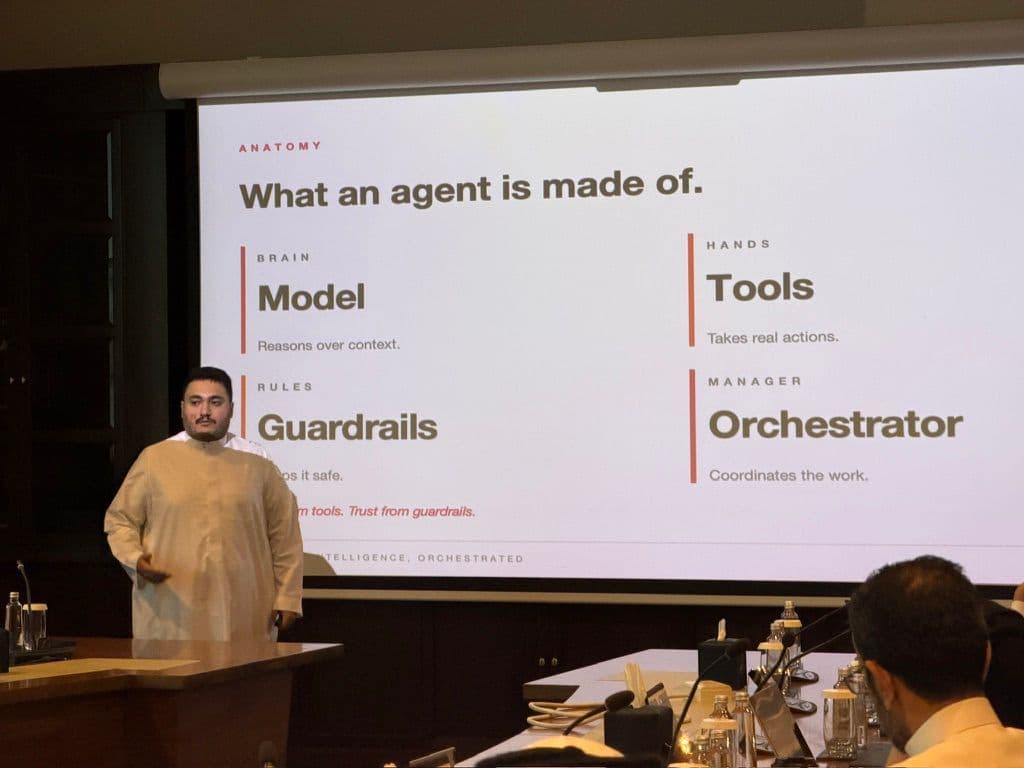
LeenAI delivered a hands-on session on AI agents for small businesses to a group of Saudi entrepreneurs. Unlike the executive MBA version of the same topic, this session was scoped specifically to what a 2-to-15-person company can actually deploy in the next 90 days.
The framing: stop trying to "use AI." Start asking which repeated daily task you'd hire a junior person to handle. That's where the agent goes.
What the session covered
1. Agents in plain language for small teams
We grounded the concept early. An agent is not a chatbot. It is a system that reads your inbox or your inventory or your CRM, decides what to do based on rules you set, drafts the action, and hands it to you for approval.
Examples from real Saudi small businesses:
- Read every incoming WhatsApp message, classify it, draft a reply, wait for the founder to tap approve.
- Watch the catalog, flag when a high-margin product runs low, draft a re-order email to the supplier.
- Read invoices, extract amounts and due dates, post them to the calendar with payment reminders.
In each case the agent does the boring part. The founder approves.
2. What's worth automating in a small business
We worked through a simple test: a task is worth automating if it (a) repeats at least once a week, (b) has a clear rule for what "correct" looks like, and (c) wastes founder time that should go to customers or growth.
If a task fails any of those tests, don't automate it yet. Either it's too rare to matter, or the rules are still being figured out.
3. Where to draw the human approval line
This was the most discussed part. In a small business, every approval is a founder's time. We drew a clear line:
- Always auto-approve: internal categorization, drafts, summaries, reminders, alerts.
- Always need human approval: anything that sends to a customer, touches money, signs anything, or commits the business externally.
The lesson: build agents so the boring 80% is automatic, but the final tap is always human.
4. Tools entrepreneurs actually have access to
We avoided "you need a developer." We showed what's possible right now with:
- WhatsApp Business + a no-code automation layer
- Spreadsheets + a paid AI API
- Email + a simple agent that reads, classifies, and drafts
- A custom GPT trained on the company's policies, returns, and pricing
Each of these costs less than a single junior hire per month.
5. The honest cost picture
We discussed cost transparently. A small-business agent typically runs $10-$60/month in API costs, plus setup time. The bigger cost is discipline — keeping the rules clean, reviewing what the agent did weekly, and updating the rules as the business evolves.
Why this matters for small businesses
Most "AI" advice for small businesses is generic content marketing. What we shared was the specific shape of what works: pick one repeated workflow, hand it to an agent, keep the human approval gate, measure the time you got back.
The entrepreneurs who succeed with agents are the ones who treat them as a precise tool, not a magic wand.
Looking ahead
LeenAI delivers tailored AI sessions for entrepreneurs, founder networks, and small operating teams across Saudi Arabia. If you run a small business and want a session designed around your specific workflows, get in touch — we'll design one with you.