

What Is Marketing Automation? A Complete Guide for Saudi Businesses
Marketing automation is the use of software, connected data and predefined workflows to manage repetitive marketing activities. It can help companies plan campaigns, nurture leads, prepare content, coordinate sales handoffs and measure results. Effective marketing automation does not eliminate human decision-making; it gives teams a controlled system for executing approved marketing work efficiently.
For Saudi businesses, marketing automation can reduce fragmented work across email, websites, customer relationship management systems and other channels. However, the technology must be implemented with clear business objectives, reliable data, human approvals and appropriate controls for protecting customer information.
How does marketing automation work?
Marketing automation works by using business rules, customer data and events to trigger predefined marketing actions or tasks.
A basic workflow may operate as follows:
A visitor completes a form on the company website. The system records the visitor as a potential lead. The lead is assigned to the correct segment. An approved email or follow-up task is prepared. The lead’s actions are recorded. Qualified opportunities are passed to the sales team. Marketing and sales outcomes are measured.
Traditional marketing automation software follows predefined rules. More advanced systems can use artificial intelligence to analyse information, recommend the next action, prepare content or identify potential problems. Nevertheless, sensitive decisions should remain subject to human approval.
The objective is not simply to automate more tasks. It is to ensure that every task supports an approved marketing objective and produces measurable business value.
What marketing activities can be automated?
Marketing automation can support activities across the customer journey, from initial awareness to retention.
Lead capture and organization
The system can collect leads from website forms, campaigns, events, emails or approved messaging channels. It can then organize them using criteria such as:
Industry Company size Location Area of interest Buying stage Product or service requirements Previous interactions Communication permissions
This creates a more consistent process than keeping enquiries in disconnected spreadsheets, inboxes or personal notes.
Lead nurturing
Not every lead is ready to speak with sales immediately. Marketing automation can support approved nurturing workflows that provide relevant information over time.
For example, a manufacturing company may send different resources to procurement managers, engineers and project consultants. Each audience has different questions and requires different evidence before making a decision.
Automated nurturing should always respect the customer’s consent, preferred language and permitted communication channels.
Lead qualification and sales handoff
Marketing automation can help teams identify whether an enquiry meets predefined qualification criteria. It may consider factors such as company fit, expressed need, engagement and buying intent.
The system can then:
Request missing information Recommend a qualification level Create a sales task Notify the appropriate employee Prepare a structured lead summary Record the reason for the recommendation
The final commercial decision should remain with the responsible employee, particularly where pricing, eligibility or contractual commitments are involved.
Email marketing
Businesses can automate approved email sequences for activities such as:
New-lead follow-ups Event communications Educational campaigns Product updates Customer onboarding Renewal reminders Re-engagement campaigns
Automation does not remove the need for consent management, unsubscribe controls, sender authentication and suppression lists. These requirements should be built into the workflow instead of being checked after a campaign has started.
Content operations
AI-supported marketing automation can assist with content planning and production. Possible workflows include:
Identifying content gaps Preparing campaign briefs Drafting blogs or landing pages Creating email and social-media variations Checking brand terminology Reviewing claims against approved evidence Sending content for human approval Recording content versions Scheduling approved assets
Content should not be generated from unsupported assumptions. For businesses selling technical or regulated products, claims should be connected to reliable sources such as approved product data, policies, certificates or internal documentation.
Campaign management
A marketing automation platform can coordinate campaign tasks across teams and channels.
This can include:
Defining the objective Selecting the audience Assigning responsibilities Preparing content Applying approval rules Generating tracking parameters Scheduling approved activities Monitoring results Creating follow-up tasks Producing performance reports
Automation can improve execution, but campaign strategy, budget allocation and consequential brand decisions still require accountable human owners.
Reporting and performance monitoring
Marketing automation can bring data from different channels into one reporting process. Teams may monitor:
Leads generated Qualified leads Meetings booked RFQs or opportunities created Conversion rates Pipeline influenced Time required to launch campaigns Content assets produced Manual hours saved Approval delays Email deliverability Policy violations Cost per lead Revenue contribution
The correct KPIs depend on the company’s objective. Publishing more content or sending more emails does not automatically mean that marketing performance has improved.
What is the difference between marketing automation and a Marketing OS?
Marketing automation usually executes specific campaigns, messages, triggers or workflows. A Marketing Operating System has a broader purpose: it is intended to connect company objectives, trusted information, marketing decisions, coordinated work, controlled actions, outcomes and learning.
LeenAI’s Marketing OS 360 blueprint describes this path as:
Objective → Truth → Decision → Plan → Work → Action → Outcome → Learning → Controlled Change
Under this model, marketing is treated as a governed company function rather than a collection of disconnected campaigns.
A Marketing OS may coordinate areas such as:
Marketing governance and strategy Market and competitor intelligence Customer segmentation Product and service portfolio information Brand and value propositions Customer journeys Marketing plans and budgets Content and communications Channel activation Lead qualification Commercial handoff Retention and loyalty Attribution and forecasting Experimentation and learning
Marketing automation remains part of the system, but it does not independently own company strategy, official customer records, financial information or approval authority.
It is important to note that LeenAI Marketing OS 360 is currently documented as a design blueprint. It should not be presented as a fully implemented production platform or as proof of realized business results.
How does LeenAI approach governed marketing automation?
LeenAI’s marketing materials describe an approach based on company evidence, controlled workflows and human authority.
The proposed structure includes several important principles.
Use trusted company information
Marketing content and recommendations should be grounded in approved company sources. Depending on the business, these sources may include:
Product catalogues Technical datasheets Certificates Customer records CRM data ERP data Approved pricing information Brand guidelines Company policies Previous campaign results
A knowledge and evidence layer can help prevent marketing agents from creating unsupported technical, commercial or compliance claims.
Keep consequential decisions with people
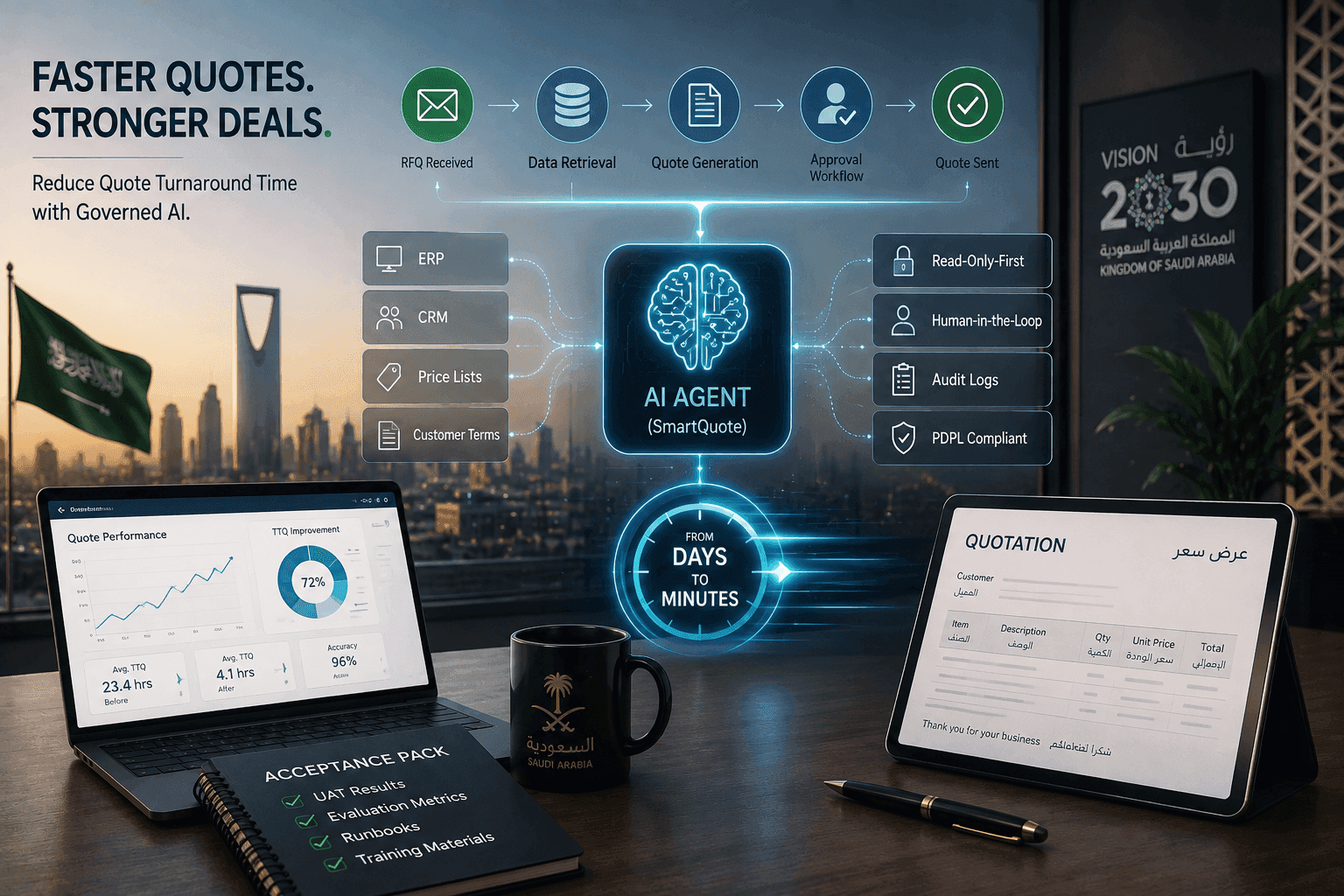
AI agents may observe, analyse, recommend or prepare work inside an approved workflow. They should not independently approve consequential decisions or execute external actions without the required authority.
Actions that may require human approval include:
Publishing content Sending external communications Changing official customer records Approving marketing expenditure Making pricing claims Changing approved brand language Contacting customers through sensitive channels Record actions and evidence
A governed automation process should record what happened, who or what initiated it, the information used and the resulting outcome.
LeenAI’s materials call for audit events containing information such as:
The actor or agent The action Date and time Reason Supporting source Confidence level Risk level Approval status Final outcome
This makes it easier to investigate mistakes, improve workflows and demonstrate that controls were applied.
Start with limited access
A safe implementation generally begins with read-only access. During this stage, the system may retrieve information, generate recommendations or prepare drafts without changing official records.
Write permissions can be introduced later for specific operations after testing, approval and rollback procedures have been established.
How can marketing automation support PDPL-aware operations?
Marketing automation often processes personal data, including names, contact details, job titles, browsing behaviour and communication history. Saudi companies must therefore consider the Personal Data Protection Law when designing marketing workflows.
Operational controls may include:
Recording whether consent is granted, withdrawn or unknown Keeping evidence of the consent source Recording the date and purpose of consent Respecting preferred communication channels Supporting unsubscribe and opt-out requests Limiting access according to employee roles Masking personal information where appropriate Minimizing personal data in system logs Defining data-retention periods Reviewing sensitive actions before execution Maintaining evidence and audit trails
Marketing automation software does not make a business automatically compliant. The company remains responsible for its legal basis, policies, data use and operational decisions.
What are the main benefits of marketing automation?
When implemented correctly, marketing automation can provide several benefits:
Reduced repetitive administrative work Faster response to new enquiries More consistent lead follow-up Better coordination between marketing and sales Improved visibility across campaigns More reliable reporting Consistent use of approved brand language Better control over technical and commercial claims Clearer accountability Easier identification of workflow problems More time for strategic and creative work
The value should be demonstrated through measurable changes rather than general claims about efficiency.
What are the risks of marketing automation?
Automation can also create problems when implemented without governance.
Common risks include:
Sending messages without valid permission Using incomplete or outdated customer data Publishing inaccurate content Creating unsupported product claims Passing poor-quality leads to sales Automating inefficient processes Giving systems excessive permissions Producing high volumes of low-value content Losing visibility across tools and channels Measuring activity instead of business outcomes
These risks can be reduced through defined ownership, evidence requirements, approval gates, testing, monitoring and recovery procedures.
How should a Saudi company begin?
A company should begin with one bounded workflow that has a clear problem, responsible owner and measurable outcome.
A practical starting process is:
Select a repetitive, high-value marketing workflow. Document the current manual process. Define the expected business outcome. Establish baseline performance. Identify the necessary data sources. Confirm access and consent requirements. Define human approval points. Build a limited read-only workflow. Test it against realistic scenarios. Compare results with the baseline. Decide whether to stop, improve or scale.
LeenAI’s wider pilot methodology uses a governed six-to-eight-week structure covering discovery, connectors, guardrails, User Acceptance Testing, training and handover. The exact scope should depend on the client’s systems, data readiness and approved use case.