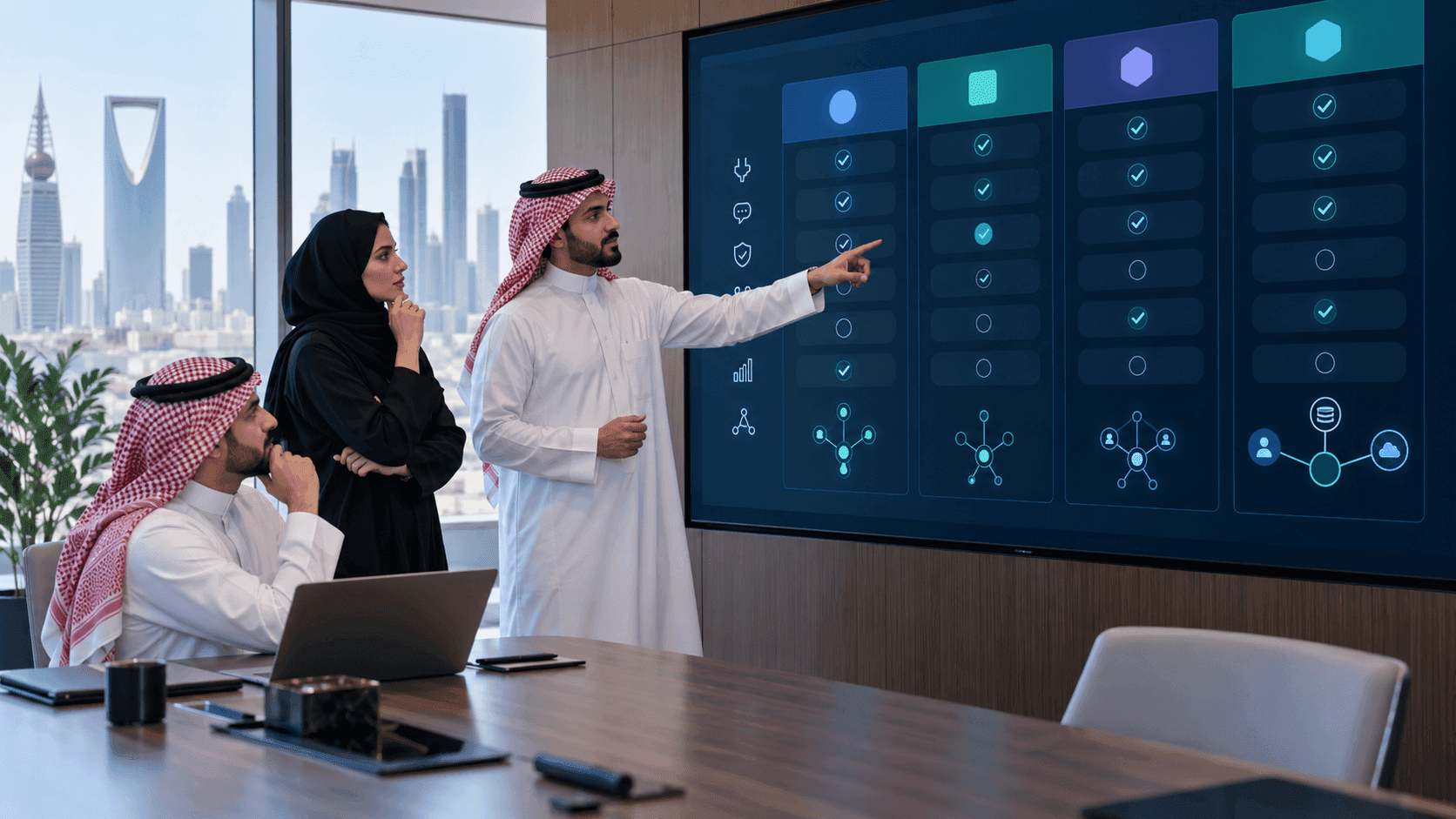


لماذا تعتبر وكلاء الذكاء الاصطناعي حيوية لصناع القرار في السعودية؟
توفر وكلاء الذكاء الاصطناعي قدرة تحويلية لصناع القرار في المؤسسات السعودية، خاصة مع توافق الدولة مع أهداف التحول الرقمي لرؤية 2030. تقدم هذه الوكلاء تحليلات بيانات في الوقت الحقيقي، مما يمكّن مديري المعلومات ومديري العمليات من اتخاذ قرارات مستنيرة بسرعة. من خلال دمج وكلاء الذكاء الاصطناعي، يمكن للشركات تحسين الكفاءة، وخفض تكاليف التشغيل، وتحسين رضا العملاء.
علاوة على ذلك، تم تصميم وكلاء الذكاء الاصطناعي للعمل ضمن الأطر التنظيمية في المملكة العربية السعودية، مما يضمن الامتثال لقانون حماية البيانات الشخصية (PDPL). وهذا يعني أن البيانات تُدار بأمان، مع سجلات تدقيق وإشراف بشري، مما يوفر الطمأنينة لصناع القرار المعنيين بسلامة البيانات والخصوصية.
كيف تتماشى وكلاء الذكاء الاصطناعي مع رؤية 2030؟
تهدف رؤية 2030 إلى تنويع الاقتصاد السعودي وتطوير القطاعات الخدمية العامة مثل الصحة والتعليم والبنية التحتية والسياحة. تلعب وكلاء الذكاء الاصطناعي دورًا حاسمًا في هذه الرؤية من خلال تحسين العمليات وتعزيز تقديم الخدمات. على سبيل المثال، في قطاع الرعاية الصحية، يمكن لوكلاء الذكاء الاصطناعي تبسيط إدارة بيانات المرضى، مما يؤدي إلى تحسين نتائج المرضى وكفاءات التشغيل.
في مجال التعليم، يمكن لوكلاء الذكاء الاصطناعي تخصيص تجارب التعلم، وتقديم مسارات تعليمية شخصية للطلاب. من خلال القيام بذلك، يساهمون في تطوير قوى عاملة أكثر مهارة، متماشية مع هدف رؤية 2030 لتنويع الاقتصاد من خلال تطوير رأس المال البشري.
ما هي تدابير الحوكمة التي تضمن أمان وكلاء الذكاء الاصطناعي؟
تعد الحوكمة جوهرية في نشر وكلاء الذكاء الاصطناعي داخل المؤسسات السعودية. تضمن LeenAI أن جميع الحلول الذكاء الاصطناعي هي للقراءة فقط أولاً ومشرف بشري، مما يعني أن وكلاء الذكاء الاصطناعي لا يمكنهم تغيير البيانات دون تدخل بشري. يقلل هذا النهج من المخاطر المرتبطة باتخاذ القرارات الذاتية ويضمن دائمًا وجود إشراف بشري.
بالإضافة إلى ذلك، فإن وكلاء الذكاء الاصطناعي مدركين لقانون حماية البيانات الشخصية (PDPL)، مما يعني أنهم مصممون للامتثال لقوانين حماية البيانات في المملكة العربية السعودية. يتضمن ذلك الحفاظ على سجلات تدقيق تفصيلية، وضمان إقامة البيانات، والالتزام بمبادئ تقليل البيانات. تحمي هذه التدابير المؤسسات من المخاطر القانونية وتعزز الثقة في أنظمة الذكاء الاصطناعي.
كيف يمكن قياس العائد على الاستثمار لوكلاء الذكاء الاصطناعي؟
يتضمن قياس العائد على الاستثمار (ROI) لوكلاء الذكاء الاصطناعي تقييم عدة مؤشرات أداء رئيسية (KPIs). تشمل هذه المؤشرات الوقت إلى الاقتباس (TTQ)، وحل الاتصال الأول (FCR)، ومتوسط وقت التعامل (AHT). من خلال تحسين هذه المقاييس، تظهر وكلاء الذكاء الاصطناعي قيمتها في تسريع العمليات وتقليل التكاليف.
على سبيل المثال، يمكن لوكيل الذكاء الاصطناعي SmartQuote من LeenAI تقليل الوقت المطلوب بشكل كبير لتوليد الاقتباسات، مما يؤدي إلى إغلاق الصفقات بشكل أسرع وتحسين رضا العملاء. من خلال تحديد مؤشرات أداء رئيسية واضحة في بداية نشر وكيل الذكاء الاصطناعي، يمكن للمؤسسات السعودية تتبع التقدم وقياس الفوائد من الناحية المالية.
ما الذي يقدمه برنامج تجريبي لمدة 6 أسابيع؟
يوفر البرنامج التجريبي لمدة 6 أسابيع مع LeenAI للمؤسسات السعودية تقييمًا شاملاً لأداء وكلاء الذكاء الاصطناعي. يشمل ذلك اختبار قبول المستخدم (UAT)، والتقييمات، والكتب التشغيلية، والتدريب. تم تصميم هذه البرامج التجريبية لتقديم نتائج ملموسة، مما يثبت قدرات وكلاء الذكاء الاصطناعي قبل التنفيذ على نطاق واسع.
خلال البرنامج التجريبي، تحصل المؤسسات على رؤى حول كيفية عمل وكلاء الذكاء الاصطناعي داخل سياقاتها التشغيلية المحددة، مما يسمح بالتعديلات والتحسينات. يضمن هذا النهج أن تفي وكلاء الذكاء الاصطناعي بالاحتياجات الفريدة للأعمال وتتوافق مع الأهداف الاستراتيجية.
الخاتمة: جعل وكلاء الذكاء الاصطناعي تعمل من أجلك
بالنسبة لصناع القرار في السعودية، فإن نشر وكلاء الذكاء الاصطناعي ليس مجرد تبني تكنولوجيا جديدة، بل هو تعزيز استراتيجي لقدرات الأعمال. من خلال التركيز على الحوكمة، والتوافق مع رؤية 2030، وقياس العائد على الاستثمار من خلال مؤشرات أداء رئيسية واضحة، تصبح وكلاء الذكاء الاصطناعي أصولًا لا تقدر بثمن في مجموعة أدوات صنع القرار. لمعرفة المزيد عن كيف يمكن أن تدعم LeenAI مؤسستك، تواصل معنا أو استكشف OpsRAG من LeenAI للحصول على رؤى مفصلة.